Tired of your inbox overflowing with promotional junk and potential scams? A temporary email no spam service provides a disposable, anonymous email address you can use for any online sign-up, download, or forum registration. It acts as a protective shield, capturing all the spam and unwanted emails so your primary, personal inbox remains pristine, secure, and clutter-free. It’s a simple, free tool for anyone looking to take back control of their digital mail.
Key Takeaways
- Disposable Shield: A temporary email creates a throwaway address that receives emails, isolating spam from your real inbox.
- Enhanced Privacy: It prevents websites and services from collecting your primary email, reducing targeted advertising and data profiling.
- Phishing Protection: By not using your main email for untrusted sites, you lower the risk of falling for sophisticated phishing attacks.
- Zero Maintenance: Most services auto-delete emails after a short time (e.g., 24 hours), requiring no manual cleanup from you.
- Universal Use Case: Ideal for one-time downloads, forum sign-ups, app trials, and any situation where you doubt an email is truly needed long-term.
- Free & Instant: Generating a temporary email address is typically free, takes seconds, and requires no personal information to create.
- Not for Critical Accounts: Never use a temporary email for banking, primary social media, or any account where password recovery is essential.
[FEATURED_IMAGE_PLACEHOLDER]
📑 Table of Contents
- What Exactly is a “Temporary Email No Spam” Service?
- The Core Benefits: Why Your Inbox Will Thank You
- Perfect Use Cases: When to Reach for a Disposable Inbox
- Choosing the Right Temporary Email Service
- Best Practices and Important Limitations
- The Future of Inbox Management: A Proactive Strategy
- Conclusion: Reclaim Your Digital Space
What Exactly is a “Temporary Email No Spam” Service?
Let’s be real. Your email inbox is a digital battlefield. Every time you download a free e-book, sign up for a webinar, or comment on a blog, you’re often asked for your email address. What starts as a single subscription can quickly spiral into a tsunami of promotional newsletters, “exclusive offers,” and, worst of all, malicious phishing attempts. This is where the concept of a temporary email no spam solution comes in as your secret weapon.
At its core, a temporary email service provides you with a random, disposable email address that exists for a very short period—usually a few hours to a couple of days. You use this address for a specific, low-trust purpose. Any emails sent to that address are held on the service’s server for a brief time, after which they are automatically and permanently deleted. The address itself then vanishes into the digital ether. It’s like using a burner phone for a single call, but for your email.
The “no spam” part is the beautiful outcome. Since this address is never connected to your real identity or primary email account, all the unsolicited mail it attracts dies with the address. Your main inbox, the one you use for work, family, and banking, remains a sanctuary of important communication. It’s a proactive filter, stopping spam at the source instead of trying to unsubscribe after the fact.
How It Works: The Simple Mechanics
Using a temporary email service is refreshingly simple, often requiring fewer steps than creating a social media account. Here’s the typical flow:
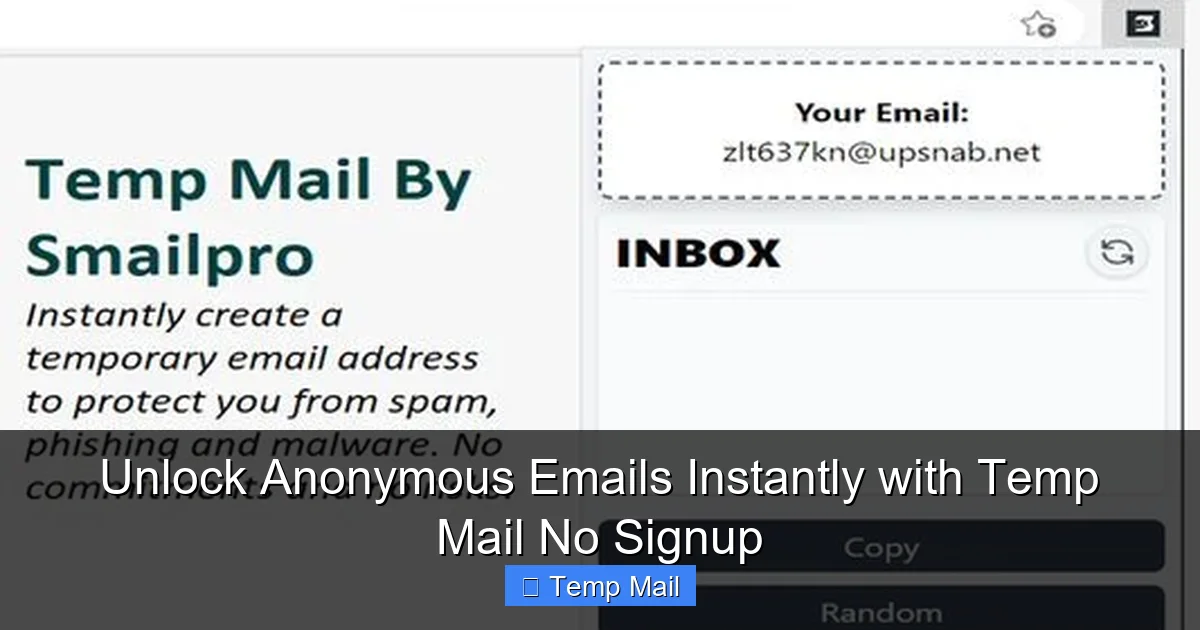
- Visit a Provider Site: Go to a website like Temp-Mail, 10MinuteMail, or Guerrilla Mail.
- Get Your Address: The site instantly generates a random email address for you (e.g., [email protected]). You don’t need to register, log in, or provide any personal details.
- Use It: Copy that address and paste it into any online form that asks for an email where you’re unsure about the long-term commitment.
- Check Your Inbox (On-Site): If you need to receive a confirmation link or a file, you return to the same temp mail website. There’s a small inbox section right on the page showing received messages. You click to read them or download attachments.
- It Expires: After a set time (often 10 minutes to 24 hours), the address and all its contents are purged from the server. That’s it. No trace.
There’s no password to remember, no app to download (though some have browser extensions), and no risk of that address being linked back to you in a data breach. It’s email anonymity in its purest form.
The Core Benefits: Why Your Inbox Will Thank You
Adopting a temporary email no spam habit isn’t just about convenience; it’s a fundamental step toward better digital hygiene. The benefits ripple out into your privacy, security, and sanity.
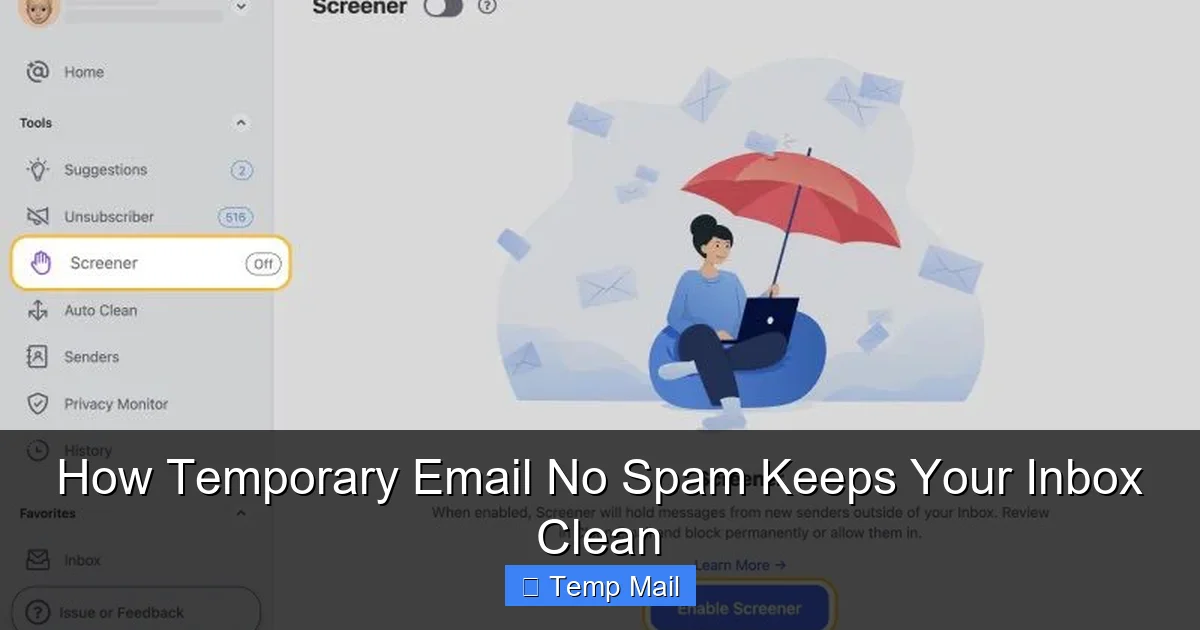
Visual guide about How Temporary Email No Spam Keeps Your Inbox Clean
Image source: clean.email
1. Drastic Spam Reduction in Your Primary Inbox
This is the most obvious and impactful benefit. When you use your real email for every random website, you’re essentially giving them permission to market to you forever. Even with the best spam filters, some always slip through. By funnelling all that potential spam into a disposable address, your primary inbox becomes a place only for emails you genuinely care about—from your boss, your family, your bank. The difference is night and day. You’ll spend less time deleting junk and more time on what matters.
2. Superior Privacy and Data Protection
Every email address is a data point. Companies use it to build profiles about your interests, location (sometimes), and online behavior. They may sell this data to advertisers or, worse, suffer a breach that leaks your email along with millions of others. A temporary email severs this link. The website you sign up for gets an email that leads to a dead end after an hour. Your real identity, your real email, and your real data profile remain untouched. It’s a simple but powerful act of data minimization.
3. A Bulwark Against Phishing and Scams
Phishing emails are becoming terrifyingly sophisticated, often mimicking your bank, Amazon, or PayPal with near-perfect accuracy. They rely on you using a familiar, trusted email address to lower your guard. If you’ve only ever given your primary email to reputable institutions, a phishing email from “YourBank Security” seems more legitimate. But if you use a temporary email for sketchy forums or download sites, and that address later receives a “your account is locked” email, you instantly know it’s a scam because you never used that address for your real bank. It creates a clear mental boundary between trusted and untrusted communications.
4. No Long-Term Commitment or Cleanup
Think about the last time you signed up for something just to get a free template. Did you remember to unsubscribe from their weekly newsletter six months later? Probably not. With a temporary email, there is no “long-term.” There is no “unsubscribe” link to hunt for because the entire channel ceases to exist. The service handles the cleanup automatically. You get what you need (the download link, the verification code) and then walk away with zero lingering obligations. It’s the ultimate “no strings attached” approach to online sign-ups.
Perfect Use Cases: When to Reach for a Disposable Inbox
Knowing *when* to use a temporary email no spam is just as important as knowing how. Here are the prime scenarios where it should be your default move.
Visual guide about How Temporary Email No Spam Keeps Your Inbox Clean
Image source: proddigital.com.br
Downloading Gated Content
You want a free PDF guide, whitepaper, or software trial. The site asks for your email to send the download link. This is a classic bait. They’ll likely add you to a newsletter you never read. Use a temporary email, get the link instantly on the temp mail site, download your file, and forget about it. The spam goes to the disposable address, not you.
Signing Up for Forums or Commenting Systems
You have a quick question on a niche forum or need to comment on a news article that requires an account. Do you really want that forum’s weekly digest or their member promotions? Almost certainly not. Create an account with a temp email. Participate, get your answer, and disengage. The forum’s emails vanish with the address.
Testing New Apps or Services
Before you commit to a new productivity app or streaming service, you might want to test it with a free trial. Often, these trials require a credit card *and* an email. Use your disposable email for the sign-up. You can still use a real payment method if needed, but all marketing communication will go to the temp address. If you decide not to subscribe, you’ve already cut off their communication channel.
Accessing Public Wi-Fi or One-Time Forms
At a coffee shop, airport, or hotel, you might need to register on a captive portal to get Wi-Fi. These portals are notorious for collecting emails and bombarding users with ads. A temporary email is perfect here. Similarly, any online petition, contest, or survey you encounter on a whim is a candidate for a disposable address.
Protecting Your Identity on Marketplaces
Selling an old couch on Craigslist or Facebook Marketplace? You’ll often communicate via platform messaging, but sometimes buyers ask to email directly. Giving out your personal email is a risk. Instead, provide a temporary address. It protects your identity and location from being exposed in the email header, and any follow-up spam from the buyer or their associated services is contained.
Choosing the Right Temporary Email Service
Not all temporary email services are created equal. While the core function is similar, a few key features can improve your experience.
Visual guide about How Temporary Email No Spam Keeps Your Inbox Clean
Image source: trueproductions.com
Key Features to Look For
- No Registration Required: The best services work the moment you land on the page. If it asks you to create an account, skip it. That defeats the purpose of anonymity and speed.
- Inbox Lifespan: Check how long the email address and its inbox last. 10 minutes is too short for most uses. Look for services offering at least 1-24 hours. Some even allow you to extend the time manually.
- Multiple Domain Options: Some services offer several domain names (e.g., @tempmail.com, @dispostable.com). This is useful if a particular site blocks known disposable email domains. You can switch to another domain provided by the same service.
- Attachment Support: Ensure the service allows you to receive attachments, not just plain text. This is crucial for downloading PDFs, images, or documents from gated content.
- Browser Extension: Services like Temp-Mail offer browser extensions. This allows you to generate a new disposable email with one click from any webpage without navigating away.
- Clear Auto-Delete Policy: The site should be transparent about when emails and addresses are permanently deleted. This is core to the “no spam” promise.
Popular and Reliable Providers
Several services have built strong reputations for reliability and privacy. Temp-Mail is one of the most popular, offering a clean interface, multiple domains, and a useful browser extension. 10MinuteMail is a classic, famously simple and fast, though its inbox window is shorter. Guerrilla Mail provides a bit more control, allowing you to choose your own inbox name from a list and offering a slightly longer lifespan. Maildrop is another minimalist favorite. It’s wise to have 2-3 bookmarked, as some websites actively block the most common disposable domains, and you may need to switch.
Best Practices and Important Limitations
To use temporary email no spam effectively and safely, you need to understand its boundaries. It’s a powerful tool, but it’s not a universal replacement for your primary email.
Golden Rule: Never for Critical Accounts
This is non-negotiable. Do not use a temporary email for:
- Banking, financial services, or PayPal/Stripe.
- Primary social media accounts (Facebook, Twitter, Instagram).
- Any account where password recovery is sent via email. If the address expires, you will be locked out forever.
- Official government services, healthcare portals, or legal documents.
- Your main cloud storage (Google Drive, iCloud, Dropbox).
These accounts require a permanent, secure, and recoverable email address. Your primary email is the key to your digital identity; protect it accordingly.
Use a Unique Password (If Required)
Some sites that force account creation might still allow a disposable email but require a password. If you must set a password for such a throwaway account, use a unique, strong password that you do not use anywhere else. Better yet, use a password manager to generate and store it, but treat the account as fully disposable. If the site is later compromised, that password won’t unlock your important accounts.
Check the Inbox Promptly
Because these inboxes have short lifespans, you need to check the service’s website shortly after using the address. If you’re expecting a confirmation link for a download, don’t wait an hour. Check within 5-10 minutes. Most services have a visible countdown timer showing exactly when your inbox will be destroyed.
Understand It’s a One-Way Street
You can receive emails at a temporary address, but you almost always cannot send emails from it. It’s an inbox-only service. This is fine for its intended use case of receiving verification links and downloads, but don’t expect to use it for regular correspondence.
The Future of Inbox Management: A Proactive Strategy
The rise of easy-to-use temporary email no spam tools signals a shift from reactive to proactive email management. Instead of letting spam into your life and then fighting it, you prevent it from ever arriving at your primary doorstep. This philosophy should extend beyond just disposable addresses.
Combine temporary emails with other best practices: use your primary email only for essential, trusted services and people. Employ your email provider’s built-in filtering and blocking features aggressively. Unsubscribe ruthlessly from any newsletter you no longer read. Consider using an email alias service (like SimpleLogin or AnonAddy) for services you trust but don’t want to market to your main address—these are forwards to your real inbox but can be disabled instantly.
In an era of data harvesting and relentless digital marketing, your email address is a valuable asset. Treating it with care by using a temporary email for the vast majority of online interactions is not paranoid; it’s prudent. It’s a small habit that pays massive dividends in reduced clutter, enhanced security, and greater peace of mind. Your clean inbox is a direct result of knowing which door to knock on—and which temporary door to leave for the salespeople.
Conclusion: Reclaim Your Digital Space
Inbox overload is a modern plague, but it’s entirely curable. The temporary email no spam approach is a simple, free, and highly effective remedy. It’s a tool of digital self-defense, allowing you to interact with the web on your terms. You can explore, download, and sign up without leaving a trail of marketing breadcrumbs leading back to your primary communication hub. By consciously separating your essential digital life from the noise of the commercial web, you create a cleaner, safer, and more manageable online existence. Start using a disposable email for your next non-essential sign-up. Experience the immediate satisfaction of a spam-free primary inbox. It’s a small change in habit that leads to a dramatically better digital life.
Frequently Asked Questions
Is a temporary email service safe and private?
Yes, reputable temporary email services are safe for their intended use. They do not require personal information to generate an address, and they do not connect the disposable address to your IP address or identity in a publicly accessible way. However, remember that the emails themselves are stored on the provider’s server temporarily, so you should never send sensitive personal data (like passwords or credit card numbers) through a temporary email.
How long does a temporary email address last?
The lifespan varies by provider. Common durations are 10 minutes, 1 hour, or 24 hours. Some services allow you to extend the time manually. The specific timeframe is always clearly displayed on the service’s website, usually as a countdown timer. After the time expires, the address and all its emails are permanently deleted and cannot be recovered.
Can I use a temporary email for account recovery?
Absolutely not. You should never use a temporary email for any account where you might need to recover a forgotten password. Since the address expires, you would be permanently locked out of that account. Temporary emails are only for receiving one-time communications like verification links or download files, not for establishing a recoverable account identity.
Will websites know I’m using a temporary email?
Yes, the website you sign up with will receive the disposable email address as your registered contact. Many websites actively check and block known disposable email domains to prevent abuse. If your chosen service’s domain is blocked, try a different provider or a different domain from the same service. The goal is to avoid giving them your real address, not necessarily to hide that you’re using a disposable one from the site itself.
What happens if I need an email after the address expires?
If the temporary email address has expired, it is gone forever along with all received messages. There is no way to retrieve them. This is why it’s crucial to check the inbox and use any verification links or download files immediately after signing up somewhere. If you need ongoing access to emails from a service, you must use your permanent, primary email address instead.
Are there any downsides to using temporary email services?
The main downside is their temporary nature, which makes them unsuitable for any important, long-term account. They also typically cannot send emails, only receive them. Some less-reputable services might inject ads into the webmail interface, but this doesn’t affect your primary inbox. Finally, because they are anonymous, they are sometimes abused by spammers, which can lead to some websites blocking entire domains, requiring you to try a different provider.