A temporary email free service provides a disposable, anonymous email address for short-term use. It’s your first line of defense against spam, phishing, and unwanted marketing, keeping your primary email secure and your inbox clean. Simply generate an address, use it, and discard it when done—no registration, no cost, maximum privacy.
Key Takeaways
- Privacy Shield: A free temporary email acts as a protective barrier, preventing websites and services from linking your online activity to your real, permanent email address and personal identity.
- Spam Killer: By using a disposable address for sign-ups, downloads, and one-time verifications, you effectively quarantine spam and promotional emails to an address that expires, keeping your main inbox pristine.
- No Commitment: These services require zero personal information, no password creation, and no long-term commitment. The address exists for minutes or hours and then vanishes.
- Security Enhancer: It reduces your “attack surface” by limiting the number of databases that contain your primary email, thereby decreasing risks from data breaches and credential-stuffing attacks.
- Versatile Tool: Beyond privacy, temp mail is perfect for testing software, accessing gated content, bypassing mandatory sign-ups, and maintaining anonymity in online forums or comment sections.
- Not for Critical Accounts: Never use a temporary email for important accounts like banking, primary social media, or any service where account recovery is vital, as you will lose access permanently.
- Choose Reputable Providers: Opt for well-known temp mail services that don’t log IP addresses or message contents, and be aware that some websites actively block known disposable email domains.
📑 Table of Contents
- What Exactly is a Free Temporary Email Service?
- How Do These Services Work? A Step-by-Step Breakdown
- Top 5 Practical Use Cases: When to Reach for a Temp Mail
- How to Choose the Right Free Temporary Email Service
- Critical Security and Limitations: What Temp Mail CAN’T Do
- The Future of Online Privacy and the Role of Disposable Email
- Conclusion: Your Simple, Free Privacy Hack
What Exactly is a Free Temporary Email Service?
Imagine you’re walking into a crowded, noisy street fair. A vendor offers you a free sample, but to get it, you have to give them your home address and phone number. You’d likely hesitate, right? You’d worry about endless junk mail, sales calls, or worse—your information being sold. That’s exactly the dilemma we face online every single day. A temporary email free service is like having a stack of pre-written, fake home addresses you can hand out at that fair. You get the sample (the website access, the download, the verification code), but you never have to reveal your real, permanent address. It’s a simple, brilliant concept for the modern web.
At its core, a temporary email (also called disposable email, throwaway email, or temp mail) is an email address that is generated for you on-demand by a third-party website. This address typically exists for a short, predetermined period—often just 10 minutes to a few hours—or until you manually delete it. The key word is temporary. It’s not designed for long-term communication, building a contact list, or recovering forgotten passwords. Its sole purpose is to act as a receptacle for the digital “junk” we accumulate online: the confirmation link for a forum you’ll never visit again, the PDF you need from a site that demands an email, or the access code for a one-time service.
The Core Philosophy: Separation of Concerns
The fundamental idea behind using a temporary email free tool is the separation of your “public” online identity from your “private” one. Your primary email address—the one tied to your bank, your family, your work—is a key piece of your digital identity. It’s often used as a username for countless other services. If that address is compromised in a data breach, hackers can use it to try and access your other accounts (this is called credential stuffing). They can also sell it to marketing firms, leading to a lifetime of targeted ads and spam. By using a disposable address for low-stakes interactions, you create a firewall. Your real email stays clean, secure, and exclusively for people and services you trust.
How Do These Services Work? A Step-by-Step Breakdown
The magic of a temporary email free platform is its stunning simplicity. There’s no complex setup, no forms to fill out, and certainly no payment. Here’s the typical, seamless workflow:
Visual guide about Get Free Temporary Email Instantly for Online Privacy
Image source: internxt.com
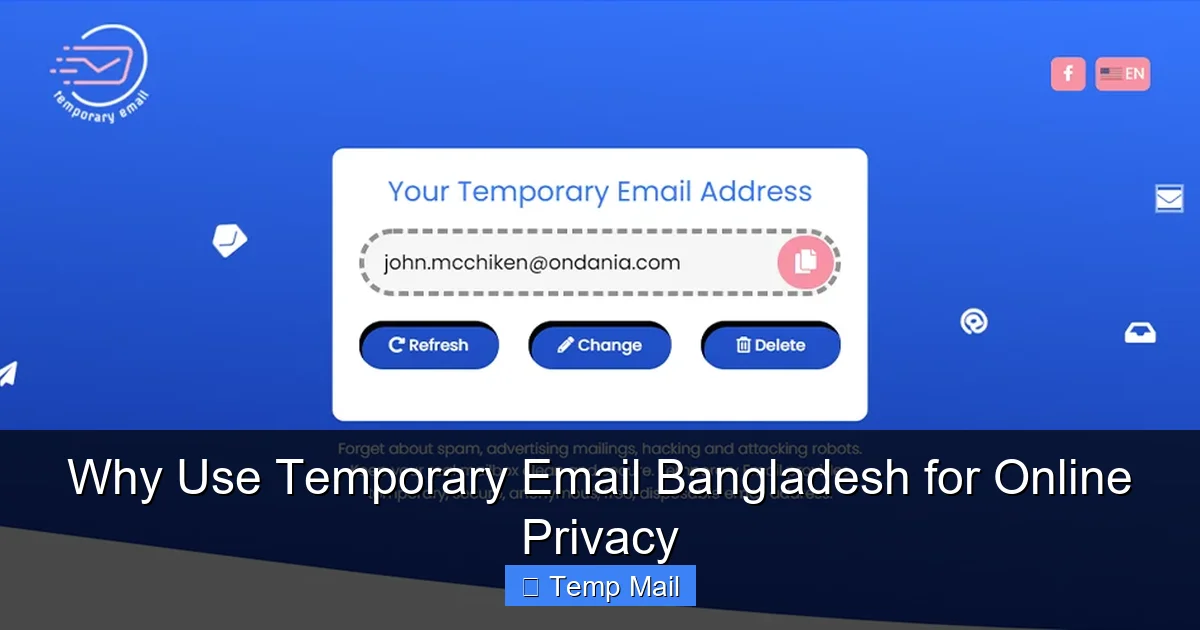
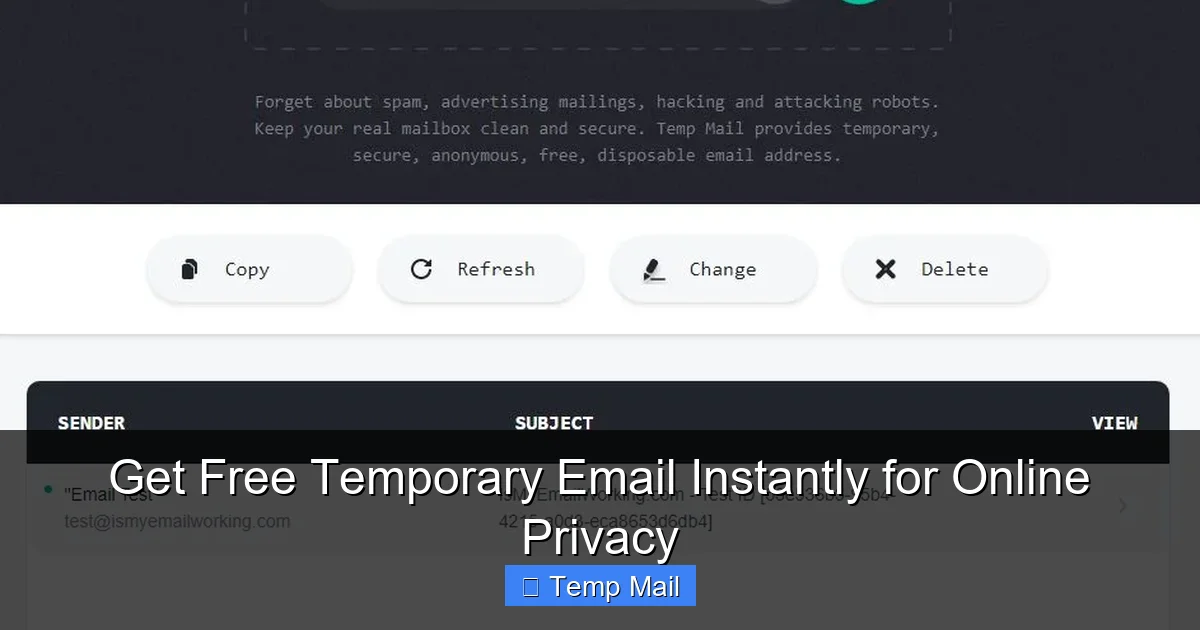
- Step 1: Visit the Website. You navigate to a provider like Temp-Mail.org, 10MinuteMail.com, or Guerrilla Mail. The homepage is usually stark—a large inbox display and a randomly generated email address already waiting for you.
- Step 2: Copy the Address. You simply click a “Copy” button next to the email address (e.g., [email protected]). No registration, no CAPTCHA, nothing.
- Step 3: Use It. You paste that address into the sign-up or download form on the website you’re visiting. You request the verification email or the download link.
- Step 4: Check the Inbox. You switch back to the temp mail tab. Often, the inbox will auto-refresh. Within seconds, the incoming email appears. You click it to view the content and find your link or code.
- Step 5: Discard. Once you’ve clicked the link or copied the code, you can close the tab. After the time limit (e.g., 10 minutes) or if you close the browser, the address and all its emails are permanently deleted from the server. Poof. Gone.
The Technology Behind the Simplicity
These services run on standard email server software, but with a crucial twist: they are configured to be ephemeral. When an address is generated, it’s mapped to a temporary mailbox in the system’s database. All emails sent to that address are routed to that specific mailbox. The “timer” is a simple script that triggers the deletion of the mailbox record and its contents after the set period. Because there’s no persistent user account (no password, no username), there’s no need for a login system. The email address itself is the key, and once it expires, the key is destroyed. This architecture is what allows them to offer a temporary email free service at scale with minimal overhead.
Top 5 Practical Use Cases: When to Reach for a Temp Mail
Knowing when to use a disposable email is half the battle. It’s a tool for specific jobs. Using it for your primary Netflix account would be a disaster. Using it for that sketchy “Free Robux” generator site? Perfect. Here are the prime scenarios:
Visual guide about Get Free Temporary Email Instantly for Online Privacy
Image source: on4t.com
1. Dodging Mandatory Sign-Ups for Content or Tools
This is the #1 use case. You want to read a detailed industry report, download a useful template, or access a “free” online tool. The website insists you “create a free account” with an email. Instead of surrendering your main address, you use a temporary email free address. You get the resource, and the website gets a valid email format that bounces after an hour. You’ve successfully bypassed the gatekeeper without the long-term commitment.
2. Protecting Yourself from Spam and Phishing Traps
Ever signed up for a “free trial” and then been bombarded with “special offers” for years? That’s because your email was sold to marketing partners. A disposable address contains that blast radius. If the company’s “privacy policy” is actually a license to spam, you’ve given them an address that will self-destruct before the first spam email even arrives. It’s a pre-emptive strike against your future self’s sanity.
3. One-Time Verifications and Account Creations
Many services require email verification to activate an account. This includes some forum platforms, app stores for developer testing, or websites for booking a single appointment. If you’ll never log in again after this one action, a temp mail is ideal. It satisfies the platform’s technical requirement (a reachable email) without creating a permanent digital footprint for you on that service.
4. Software and App Testing for Developers
For developers and QA testers, creating hundreds of test accounts can clutter a production database. Using a temporary email free service allows for rapid, clean creation of test user profiles. Each test can use a fresh, unique email that won’t interfere with real user analytics or trigger security flags for duplicate accounts.
5. Maintaining Anonymity in Online Interactions
If you need to post a candid comment on a controversial news article, participate in a sensitive forum discussion, or whistleblow (in a low-risk context), using your primary email is a traceable mistake. A disposable email provides a layer of anonymity, making it much harder to link your online commentary back to your real-world identity.
How to Choose the Right Free Temporary Email Service
Not all temporary email free providers are created equal. While the core function is similar, features, usability, and privacy policies differ. Here’s what to look for:
Visual guide about Get Free Temporary Email Instantly for Online Privacy
Image source: webdevtutor.net
Essential Features Checklist
- No Registration Required: This is the golden rule. If a site asks you to create an account to get a temp email, it defeats the purpose. The best services give you an address immediately upon arrival.
- Domain Variety: Some sites offer multiple domain options (e.g., @tempmail.com, @dispostable.com). If a particular website blocks one disposable domain, you can try another.
- Inbox Auto-Refresh: A good service will automatically check for new emails every 10-30 seconds. Manual refresh is a minor inconvenience, but auto-refresh is seamless.
- Email Lifespan: Check how long the inbox lasts. 10 minutes is standard and sufficient for most verifications. Some offer 1 hour or even 1 day—useful for projects that span a longer session.
- No CAPTCHA or Walls: Avoid services that bombard you with ads, pop-ups, or demanding CAPTCHAs before you can copy the address. That’s a poor user experience.
Privacy and Security: The Non-Negotiables
You’re using this tool for privacy, so the provider’s policy is critical. Look for clear statements that they:
- Do NOT log IP addresses. Your connection to the site should be anonymous.
- Do NOT store message content after deletion. Once the timer expires, everything is gone.
- Do NOT sell or share data. The service itself should be funded by optional premium plans or ethical advertising, not by mining your data.
Reputable providers often have a transparent “Privacy Policy” or “FAQ” section that explicitly states these things. If it’s vague or absent, steer clear.
A Few Popular, Trusted Names
While I won’t endorse one over another, established names in this space include Temp-Mail, 10MinuteMail, Guerrilla Mail, and Mailinator (which has a public inbox feature, so be careful). Stick with well-known, widely used services. They are more likely to maintain uptime, have clean interfaces, and uphold basic privacy standards. Avoid obscure, newly launched sites that could be logging everything for unknown purposes.
Critical Security and Limitations: What Temp Mail CAN’T Do
A temporary email free is a fantastic privacy tool, but it is not a magic shield. Understanding its limitations is crucial for using it safely and effectively.
The Biggest Limitation: No Account Recovery
This cannot be stressed enough. If you use a disposable email to sign up for a service where you might need to reset your password, recover a locked account, or receive important security notifications, you will be permanently locked out the moment the email expires. The service has no way to contact you. Therefore, the rule is absolute: NEVER use temp mail for any account you care about. This includes social media, banking, primary cloud storage, work-related tools, or any subscription you pay for.
It’s Not a Encryption Tool
A temporary email does not encrypt your messages. The email is stored in plain text on the provider’s server during its short lifespan. While it protects your identity from the recipient, it does not protect the content from the temp mail provider itself (though reputable ones claim not to read it). For truly sensitive communications, use end-to-end encrypted email services like ProtonMail, not a disposable address.
Websites Are Wise to Them
Many popular platforms—like Google, Facebook, Twitter, Netflix, and most major banking sites—actively maintain blocklists of disposable email domains. If you try to sign up with a temp mail address on these sites, you’ll likely get an error message saying the email is invalid. This is a security measure for them (to prevent spam and fake accounts) and a helpful nudge for you, reminding you that this is not the right tool for that particular job.
No Sender Reputation or Deliverability
Emails from disposable domains often have poor sender reputation scores. If you somehow used a temp mail to send a message (some allow it), it would almost certainly land in the recipient’s spam folder. They are designed for receiving only, and that reception is often treated with suspicion by major email providers like Gmail or Outlook.
The Future of Online Privacy and the Role of Disposable Email
As data privacy concerns mount and regulations like GDPR and CCPA give users more rights, tools that empower individual control are becoming mainstream. The temporary email free is a primitive but powerful embodiment of the “data minimization” principle—collect only the data you absolutely need. We are likely to see these services evolve.
Integration with Browsers and Password Managers
Imagine your browser or password manager (like Bitwarden or 1Password) offering a built-in “Generate Disposable Email” button right next to the password generator on every sign-up form. This seamless integration would make using temp mail the default, easy choice for one-off sign-ups, dramatically increasing adoption and user privacy by default.
More Sophisticated Blocking and Countermeasures
As these tools become more popular, websites will invest more in detecting and blocking them. We may see a cat-and-mouse game, with temp mail providers constantly rotating new domains and using more sophisticated techniques to appear as legitimate, long-lived email services.
A Shift in Mindset: From Permanence to Ephemerality
The bigger trend is a cultural shift away from the “collect everything forever” model of the early internet. Apps like Snapchat popularized ephemeral messaging. Privacy regulations enforce data deletion rights. The disposable email fits perfectly into this new ethos: not every digital interaction needs to be archived and tied to your identity forever. Some are just transactions, and they should be allowed to fade away.
Conclusion: Your Simple, Free Privacy Hack
In a digital world obsessed with collection, tracking, and profiling, the temporary email free service is a refreshingly simple act of rebellion. It’s a tool that costs nothing, takes seconds to use, and immediately plugs a major leak in your personal data security. It won’t solve all your privacy problems, but it will decisively solve the specific problem of unwanted email spam and the over-exposure of your primary email address.
The power is in the discipline of using it. Make it a habit: the next time a website, blog, or app asks for an email you don’t fully trust, don’t hesitate. Don’t even think about using your real one. Automatically reach for a disposable address. Treat your primary email like your home address—you wouldn’t give it to every stranger on the street. With a free temporary email, you now have a perfectly good P.O. box that burns itself after use. Use it, and reclaim a small but significant piece of your online privacy today.
Frequently Asked Questions
Is using a free temporary email legal?
Yes, using a disposable email service is completely legal in virtually all jurisdictions. These services operate as legitimate email providers. The legality concerns, if any, arise from how the *user* employs the address (e.g., for fraud or illegal activities), not from the act of possessing a temporary email itself.
Are temporary emails secure and truly anonymous?
They offer a layer of anonymity from the *recipient* (the website you sign up for), as they cannot trace the temp address back to you. However, security depends on the provider. Reputable services do not log IPs or message content, but you must trust their privacy policy. The email content is not encrypted between the temp mail server and the recipient’s server, so it is not suitable for highly sensitive communications.
How long does a free temporary email last?
The lifespan varies by provider. Common durations are 10 minutes, 1 hour, or 1 day. Some services let you extend the time manually. The address and all its emails are permanently deleted once the timer expires or if you close the browser session (depending on the service). Always check the specific timer on the provider’s site.
Can websites tell I’m using a temporary email?
Yes, often. Many websites maintain public or commercial blocklists of known disposable email domains (e.g., @tempmail.com, @guerrillamail.com). If you try to sign up with an address from one of these domains, the website’s validation system will typically reject it as invalid. This is why you sometimes need to try a different provider if one domain is blocked.
What’s the best practice for using a temporary email?
The golden rule: Use it for anything you don’t want to be permanently associated with or need to recover later. Ideal for one-time downloads, forum sign-ups you’ll forget, accessing gated content, and avoiding spam. Never use it for banking, primary social media, work accounts, or any service where password recovery via email is essential.
How is a temporary email different from a regular anonymous email service?
A temporary email free service is designed for instant, no-frills, short-lived use with no login. A regular anonymous email service (like ProtonMail or Tutanota) requires account creation (with a password and often recovery options), offers encryption, and is built for long-term, secure communication. The temp mail is a disposable tool; the anonymous email is a permanent, secure mailbox.