Using a temporary email for PayPal sign-up can shield your primary inbox from spam and enhance online privacy, but it directly violates PayPal’s Terms of Service and will lead to account suspension. This practice is suitable only for non-financial, low-stakes website registrations where anonymity is permitted, never for actual payment processing. Always prioritize security and understand the significant legal and practical limitations before proceeding.
Key Takeaways
- Primary Purpose: Temp mail’s core function is to provide a disposable email address for signing up to websites and services, protecting your real inbox from spam and potential data breaches.
- PayPal’s Explicit Stance: PayPal’s User Agreement explicitly prohibits the use of temporary or disposable email addresses. Accounts created with them are immediately flagged and permanently banned.
- Anonymity vs. Functionality: While temp mail offers a layer of identity masking for initial sign-ups, it renders any PayPal account created with it completely non-functional for sending, receiving, or withdrawing money.
- Detection is Automated: PayPal employs sophisticated, automated systems that cross-reference email domains against known lists of disposable email providers, making detection nearly instantaneous.
- Use Case is Limited: The ethical and practical use of “temp mail for PayPal” is limited to using a disposable address for the *initial newsletter sign-up* on a third-party site, not for creating a PayPal account itself.
- Better Alternatives Exist: For genuine PayPal account management, use a dedicated, secure email address with strong, unique passwords and two-factor authentication, or utilize email aliasing features from providers like Fastmail or ProtonMail.
- Risk of Data Loss: Once a temp email expires, all associated communications are permanently deleted. Any critical information, like password resets or account notifications from a service, will be lost forever.
📑 Table of Contents
- Why the Quest for Online Anonymity Matters
- The Mechanics of Temp Mail: How Disposable Emails Actually Work
- PayPal’s Absolute War on Disposable Emails: The “Why”
- The Step-by-Step Reality: What Happens When You Try
- Risks and Severe Limitations Beyond the Ban
- Legal and Ethical Gray Areas: Not a Loophole
- The Right Path: Achieving Privacy Without Self-Sabotage
- Conclusion: The Short, Sad Story of Temp Mail for PayPal
Why the Quest for Online Anonymity Matters
Let’s be honest. The internet can feel like a crowded room where everyone is asking for your name, your email, and your phone number. Every free service, every discount offer, every “must-read” article seems to have an invisible price tag attached to it: your personal contact information. Before you know it, your primary email inbox is a war zone of promotional spam, newsletter overload, and the occasional phishing attempt that slips through the filters. This is where the seductive idea of temp mail for PayPal and other services first takes root. It promises a simple, elegant solution: a ghost email address that vanishes after use, leaving no trace and no spam backlog.
For privacy-conscious users, the desire to separate their digital identities is completely understandable. You might want to explore a niche forum without linking it to your professional LinkedIn profile. You might need to download a guide from a sketchy-looking site (we’ve all been there) without inviting a barrage of marketing emails for the next year. The logic seems sound: if a service only requires an email to gate content or create a basic account, why use your real, precious, daily-driver email? The concept of anonymity isn’t about doing something illegal; it’s about controlling your digital footprint and minimizing unnecessary data exposure.
However, this quest for anonymity runs into a brick wall when we start talking about financial platforms, and none is more prominent than PayPal. The phrase “temp mail for PayPal” is a common Google search, but it represents a fundamental misunderstanding of what PayPal is and how it operates. This article will dive deep into the reality of using disposable emails with PayPal, separating the myth from the legal and practical truth. We’ll explore how temp mail services work, why PayPal is uniquely hostile to them, and what you should actually do if your goal is privacy without sacrificing financial functionality.
The Mechanics of Temp Mail: How Disposable Emails Actually Work
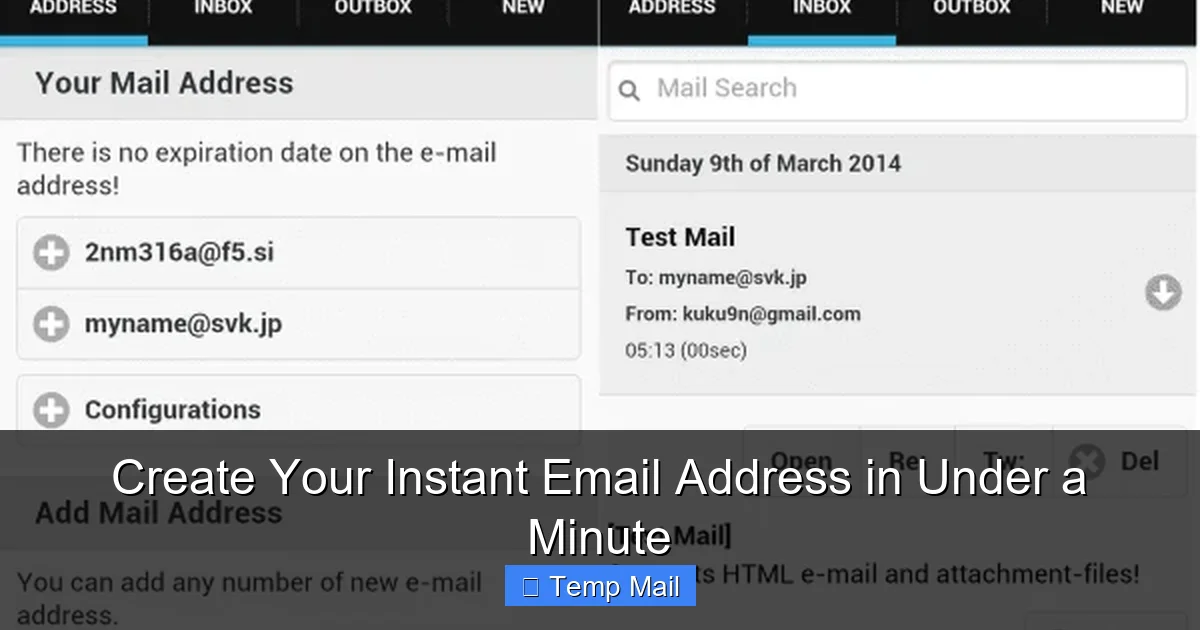
Before we tackle the PayPal problem, let’s demystify the tool itself. Temporary email services, also called disposable or throwaway email, are simple web-based platforms. You visit a site like Temp-Mail.org, 10MinuteMail.com, or GuerillaMail.com. The service instantly generates a random email address for you, usually something like [email protected]. You copy this address and paste it into the sign-up form for the website you’re visiting.
Visual guide about How to Stay Anonymous Online with Temp Mail for PayPal
Image source: news.mit.edu
The Inbox Interface: Your Temporary Window
You don’t use an external email client like Outlook or Gmail. Instead, you stay on the temp mail website and refresh a page that shows an inbox specifically for that random address. Any emails sent to [email protected] will appear right there on that webpage. You can read them, click links, and sometimes even reply. The magic—and the limitation—is in the timer. Most services give you a limited window, often 10 minutes to 1 hour, after which the email address and all its contents are permanently deleted from the server. Some services offer a slightly longer “premium” session, but the ephemeral nature is the core feature.
Why They Exist: The Legitimate Use Case
Temp mail isn’t a tool for criminals; it’s a tool for sanity. Its primary legitimate purpose is to bypass email gates for non-critical content. Need to read a single blog post that demands an email? A temp address is perfect. Want to test a software’s sign-up flow without cluttering your real inbox? Perfect. It’s a buffer between the noisy, commercial internet and your primary digital identity. The key here is “non-critical.” You are not trusting this service with your money, your identity verification, or your long-term account recovery. You are using it for a one-off interaction where the email’s only job is to click a verification link and then be forgotten.
PayPal’s Absolute War on Disposable Emails: The “Why”
Now we arrive at the crux of the matter. Why does PayPal, more aggressively than almost any other major platform, hunt down and destroy accounts created with temp mail? The answer lies in PayPal’s fundamental business model: trust and financial security.
Visual guide about How to Stay Anonymous Online with Temp Mail for PayPal
Image source: ceos3c.com
Combatting Fraud and Chargebacks
PayPal is a financial institution, not a social network. Its core operations involve moving real money. A huge problem for payment processors is fraud—people creating accounts with stolen credit cards, making purchases, and then filing chargebacks, leaving PayPal and the seller to eat the loss. A disposable email is the perfect tool for a fraudster: it provides zero traceable personal connection. By banning these domains, PayPal removes a massive, low-hanging fruit for criminals. They can’t prove who you are if you provide an email that ceases to exist in an hour.
KYC and Legal Compliance
“Know Your Customer” (KYC) and anti-money laundering (AML) regulations require financial services to verify the identity of their users. While a basic personal account has lighter checks than a business account, PayPal still needs a persistent, verifiable point of contact. A temp email that disappears fails this basic requirement. How can they send a critical legal notice, a tax document (like a 1099-K), or a security alert if the address is gone tomorrow? They can’t. Therefore, from a compliance standpoint, accepting temp emails is a non-starter.
Protecting the Ecosystem
PayPal’s reputation is built on being a secure, reliable payment method for both buyers and sellers. If sellers knew that a significant portion of PayPal transactions came from untraceable, anonymous accounts, they would lose trust in the platform. Sellers might see a surge in fraudulent chargebacks with no recourse. Buyers might have their funds frozen in limbo due to “suspicious activity” from an unverifiable account. By enforcing real email policies, PayPal protects the integrity of its entire network, which is essential for its valuation and operational license.
The Step-by-Step Reality: What Happens When You Try
Let’s walk through the hypothetical scenario of someone trying to use a temp mail for a PayPal account. It’s a short, unsuccessful journey.
Visual guide about How to Stay Anonymous Online with Temp Mail for PayPal
Image source: ceos3c.com
- Generation: You go to a temp mail site, get an address like [email protected].
- Sign-Up: You navigate to PayPal.com, enter the disposable address, create a password, and fill in whatever fake personal details you’re using.
- The Verification Email: PayPal immediately sends a verification email to [email protected]. You, sitting on the temp mail site, see it arrive. You click the “Verify Your Email” link. It works. Your email is “verified.” You might feel a moment of triumph.
- The Calm Before the Storm: You might be able to log in once or twice. You might even try to add a bank account or card (which will fail for other reasons, like mismatched names). But the clock is ticking on your temp inbox.
- Expiration and Lockout: After 10 minutes, an hour, or a few hours (depending on the service), the email address expires. The inbox vanishes. The next time you try to log in to PayPal, you will click “Forgot Password?” You will enter your disposable email. And nothing will happen. No reset email will arrive because the address no longer exists. Your account is now locked, inaccessible, and for all intents and purposes, gone.
- The Ban Hammer: Often, before the inbox even expires, PayPal’s automated systems will flag the domain (e.g., “@dropmail.me”) during the initial sign-up or verification phase. In many cases, the account creation will be rejected outright with a message like, “This email domain is not supported. Please use a different email address.” If it slips through, the account will be permanently banned within minutes or hours, and any funds in it will be held for 180 days before being forfeited as abandoned property.
The takeaway is stark: you cannot create a functional, lasting PayPal account with a temporary email. It is a technical and policy impossibility.
Risks and Severe Limitations Beyond the Ban
Even if we imagine a world where PayPal allowed it, using a temp mail for any financial service is a catastrophically bad idea due to inherent risks.
Permanent Loss of Access and Funds
This is the biggest risk. If you somehow add real money to an account tied to a disposable email and then lose access, your money is gone. PayPal’s customer support will require extensive identity verification to restore access. If the email on file is invalid, they have no way to initiate that process. You would have to prove ownership through other means (like linked bank account statements), which is a long, difficult, and often unsuccessful battle. The funds would likely be escheated to the state after a holding period.
No Account Recovery, No Support
Password resets, security codes, and all critical communications are sent via email. With a temp mail, that lifeline is cut the moment the inbox expires. You are locked out forever. PayPal Support will view an account with an unreachable email as highly suspicious and potentially fraudulent, offering minimal assistance.
Violation of Terms = Forfeiture of Rights
By using a temp mail, you are explicitly breaking PayPal’s User Agreement. This means you have zero contractual standing if something goes wrong. You cannot sue, you cannot file complaints with financial regulators effectively, and you have no consumer protections because you were not a legitimate user in the first place. You are operating entirely at PayPal’s grace, and they have no grace for policy violators.
Legal and Ethical Gray Areas: Not a Loophole
The idea of using temp mail for PayPal often stems from a mistaken belief that it’s a “loophole” to avoid providing personal information. It is not. It is a direct violation of a private company’s terms of service. While using a temp mail to avoid spam from a news site is a harmless policy violation, using it to attempt to create a financial account sits in a much riskier ethical and legal space.
If your goal is to use PayPal without revealing your *primary* personal email to the world, there is a correct and secure way to do it. Create a new, dedicated email address specifically for financial services. Use a provider that offers strong privacy (like ProtonMail) or an aliasing service (like SimpleLogin or AnonAddy). This new email should be secured with a unique, strong password and two-factor authentication. This achieves the goal of compartmentalization—your financial life is separated from your social media and newsletter life—without violating any terms or risking your money. This is the mature, responsible approach to online privacy.
The Right Path: Achieving Privacy Without Self-Sabotage
So, you value privacy. You don’t want PayPal (or any service) to have your main email. What should you do? The answer is compartmentalization, not obfuscation.
- Create a Dedicated Financial Email: Set up a new email account with a reputable provider. Use this only for banks, PayPal, investment accounts, and other critical services. Never use it for public forums, newsletters, or casual sign-ups. This keeps it clean and secure.
- Use Email Aliasing: Services like Fastmail, ProtonMail, or Apple’s Hide My Email allow you to create unique, forwardable aliases. You could have an alias like [email protected] that forwards to your real inbox. If that alias ever starts getting spam, you delete it and create a new one, all without changing your PayPal login.
- Secure That Email Relentlessly: The dedicated financial email must have a password you’ve never used anywhere else. Enable 2FA using an authenticator app (Google Authenticator, Authy), not SMS. This email account is now the master key to your financial life; guard it accordingly.
- Understand PayPal’s Limits: Even with your real, dedicated email, understand that PayPal is not a privacy tool. It is a regulated financial utility. It will report certain transactions to tax authorities. It has dispute resolution processes that involve sharing information. Accept that using PayPal means accepting their level of scrutiny and reporting.
This approach gives you the separation you want—your [email protected] isn’t in PayPal’s system—while maintaining a legitimate, secure, and permanent channel for all vital communications. You retain full control and access, and you sleep soundly knowing your money isn’t trapped in a phantom account.
Conclusion: The Short, Sad Story of Temp Mail for PayPal
The search for “temp mail for PayPal” is a search for a shortcut that doesn’t exist. It’s a desire for anonymity in a space that is fundamentally designed for accountability. While temporary email services are a brilliant tool for managing the spam and data-mining of the modern web, they are utterly incompatible with the requirements of a financial platform like PayPal. Attempting to use one will not give you a secret, anonymous PayPal account; it will give you a few minutes of a broken account before it is flagged, banned, and lost forever, potentially along with any funds you might have tried to add.
True online privacy is not about hiding from necessary services; it’s about smartly segregating your identities. Use a disposable email for the low-stakes, high-noise corners of the internet. For anything involving money, identity, or long-term access, use a dedicated, secure, and permanent email address that you control. This isn’t a compromise; it’s the only sane strategy. Protect your inbox from spam, but more importantly, protect your financial access and assets from the irreversible mistake of trying to use a temp mail for PayPal. The short-term convenience is never worth the permanent loss.
Frequently Asked Questions
Can I verify my PayPal account with a temporary email?
You might be able to click the initial verification link before the temp inbox expires, but PayPal’s automated systems will quickly detect and ban the account. You will be locked out permanently within a very short time frame.
Is using temp mail for PayPal illegal?
While not typically “illegal” in a criminal sense, it is a clear and severe violation of PayPal’s binding User Agreement. This violation forfeits all your rights to use the service, access your funds, or receive customer support.
What email providers does PayPal block?
PayPal blocks entire domains associated with known disposable email services (e.g., @tempmail.com, @10minutemail.com, @guerrillamail.com). They maintain dynamic, updated lists, and attempting to sign up with any such domain will be rejected immediately.
What’s the safest way to keep my main email private from PayPal?
The safest method is to create a new, dedicated email address solely for financial services like PayPal. Secure it with a unique password and two-factor authentication. Alternatively, use an email aliasing service to create a forwardable alias that you can delete if it ever gets compromised.
Will PayPal suspend an old account if I change my email to a temp mail later?
Yes. PayPal continuously monitors account details. Changing your primary email to a disposable domain is a major red flag and will trigger an immediate security review, leading to suspension and a demand to revert to a verified, permanent email address.
Can I recover funds from a PayPal account locked due to a temp email?
Recovery is extremely difficult and often impossible. Without access to a verified, working email, you cannot complete the identity verification process PayPal requires. The funds will typically be held for 180 days and then escheated to the state as abandoned property.