Tired of spam calls and texts clogging your personal number? Temporary email receive SMS services are your ultimate privacy shield. They provide a disposable, real phone number for one-time verifications, keeping your identity safe and your inbox clean. Setup takes seconds, costs nothing, and puts you back in control of your digital footprint. This guide shows you exactly how to use these tools like a pro.
Let’s be honest. The digital world asks for a lot. To download a simple app, join a new social platform, or access a free trial, you’re often met with a familiar wall: “Enter your phone number for SMS verification.” For many, this is a moment of hesitation. Your phone number is more than just digits; it’s a direct line to your personal life, a key to your identity, and a beacon for marketers and spammers. What if you could bypass this hurdle entirely, keeping your real number private while still getting the job done? Enter the powerful, privacy-focused world of temporary email receive SMS services. This isn’t a niche hack; it’s a mainstream tool for digital hygiene. In the next few minutes, you’ll move from curious to competent, mastering how to use these services to take back control.
Key Takeaways
- Privacy First: A temporary SMS number acts as a protective buffer, ensuring your real phone number is never shared with websites or apps, eliminating spam and unwanted contact.
- Simple & Instant: You can generate a working phone number in under 60 seconds through dedicated websites or apps, with no registration or payment required for basic services.
- Universal Use Case: Perfect for any online service requiring SMS verification—social media sign-ups, app downloads, gaming accounts, or forum registrations—without long-term commitment.
- Ephemeral by Design: These numbers are short-lived. They typically expire after 10-30 minutes or a few received messages, after which they are recycled and become inactive.
- Free Core, Paid Upgrades: Most platforms offer a free tier with basic numbers. Premium plans provide longer-lasting numbers, more countries, and ad-free experiences for heavy users.
- Not for Critical Accounts: Avoid using temporary numbers for essential accounts like banking, primary email recovery, or government services, as you will lose access when the number expires.
- Security Awareness: While great for privacy, remember the service provider can see received messages. Never use temp numbers for two-factor authentication (2FA) on sensitive accounts you need to keep.
📑 Table of Contents
- What Exactly is a Temporary SMS Number?
- Why You Absolutely Need This Tool in 2024
- A Step-by-Step Guide: How to Receive SMS on a Temporary Number
- Top 5 Use Cases: Where Temporary Numbers Shine
- Security & Ethics: What You Need to Know
- The Future of Temporary Communication & Alternatives
- Conclusion: Your Digital Shield Awaits
What Exactly is a Temporary SMS Number?
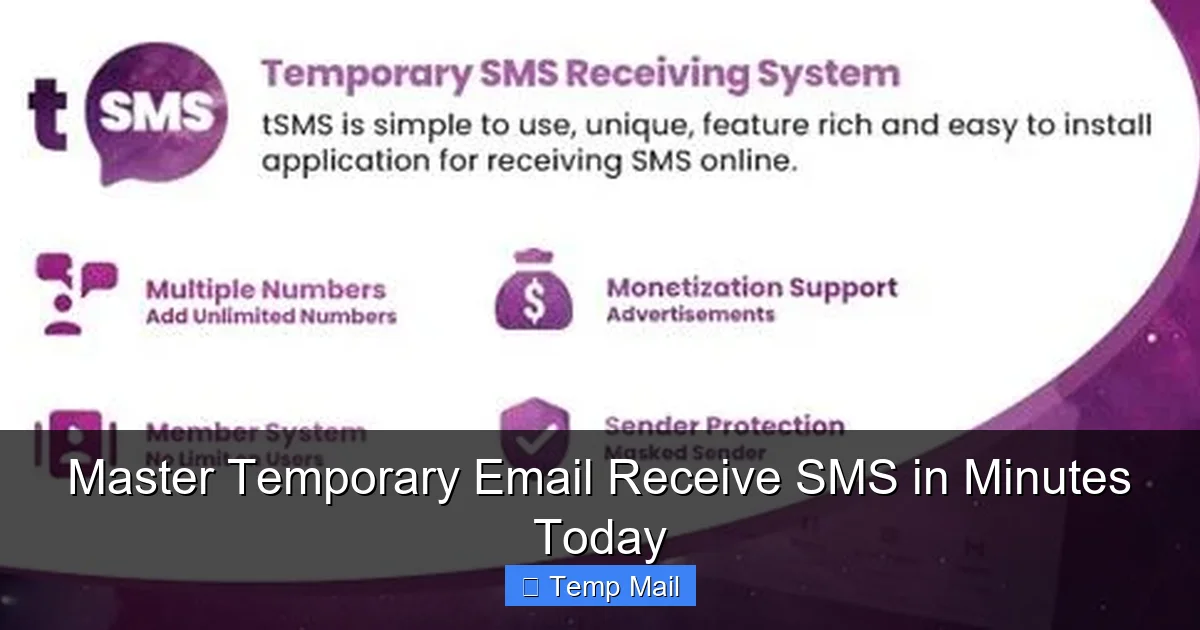
At its core, a temporary SMS number is a real, functional phone number provided by a third-party service for a very short duration. It’s not a “fake” number that doesn’t work; it’s a disposable number. It can receive the same SMS text messages that your personal mobile number can. The magic lies in its temporary nature and its separation from your identity.
The Disposable Phone Number, Explained
Think of it like a burner phone, but digital and instant. Traditional “burner” phones involve buying a cheap prepaid device and SIM card. A temporary SMS number service does the same thing in software. The service owns a pool of real phone numbers from carriers around the world. When you visit their website or app, they assign one of these numbers to you temporarily. Any SMS sent to that number is intercepted by their system and displayed on a web dashboard or app interface for you to see. Once its time is up or its message quota is filled, the number is retired and returned to the pool for someone else to use later. This cycle is what makes the service free for basic use—the overhead is low because numbers are reused efficiently.
How It Differs from Your Regular Number
The key differences are permanence and purpose. Your personal mobile number is tied to your identity, your contract, and your life. It’s permanent (or at least long-term). A temporary number has none of that baggage. It has no name, no contract, and no history. Its sole purpose is to facilitate a single verification and then vanish. This fundamental difference is what provides the privacy benefit. The website you’re signing up for sees a valid, working number, but it has absolutely no link back to you, the human behind the screen.
Why You Absolutely Need This Tool in 2024
You might be thinking, “Is this really necessary?” The answer is a resounding yes, for several compelling reasons that go beyond just avoiding a few spam calls.
Visual guide about Master Temporary Email Receive SMS in Minutes Today
Image source: businessconnectindia.in
The Spam & Data Broker Epidemic
When you hand over your personal phone number, you’re often signing up for more than just a service. Many companies sell or share contact data with data brokers and marketing firms. This is the primary pipeline for spam texts and robocalls. Once your number is out there, it’s nearly impossible to reel back in. Using a temporary number contains the risk. The spam goes to a dead-end number that will cease to exist in 20 minutes, protecting your primary line indefinitely.
Regaining Control of Your Digital Identity
Every account tied to your real phone number is another thread in the tapestry of your digital identity. For privacy-conscious users, minimizing this footprint is crucial. A temporary number allows you to interact with low-trust or one-time services without contributing to that permanent profile. It’s a simple act of data sovereignty—deciding where your information goes and for how long.
Bypassing Regional Restrictions & Testing
Many services are geo-restricted or offer different content based on your phone’s area code. Temporary SMS services often provide numbers from dozens of countries. A developer testing an app’s SMS flow, a traveler wanting to sign up for a local service, or a researcher studying regional app versions can all use this to their advantage without needing a physical SIM card from that country.
A Step-by-Step Guide: How to Receive SMS on a Temporary Number
Using these services is deliberately simple. The barrier to entry is zero. Here’s a practical, no-fluff walkthrough.
Visual guide about Master Temporary Email Receive SMS in Minutes Today
Image source: buzzsurnet.com
Step 1: Choose a Reputable Service
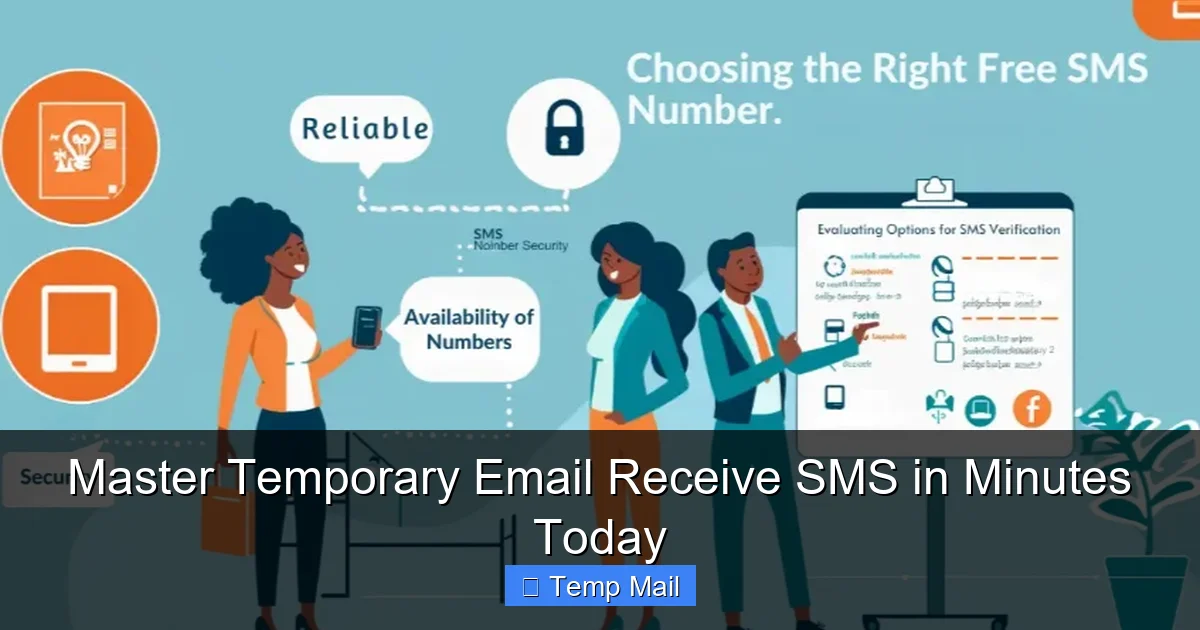
Not all services are created equal. For beginners, start with well-known, web-based platforms. Popular and reliable options include:
- TempMail.org / Temp-Mail.io: Primarily known for disposable email, they often include SMS reception.
- ReceiveSMS.com: A dedicated SMS reception site with a massive pool of numbers from many countries.
- FreeOnlinePhone.org: Simple interface, focuses purely on receiving SMS.
- SMSTome.com: Offers numbers and a clear list of recent messages for each number.
For mobile users, apps like TextNow (offers a free, persistent US number with ads) or Google Voice (US-based, more permanent) are options, though they often require sign-up and are less “disposable” than the pure web services.
Step 2: Generate Your Number
Navigate to the service’s website. You’ll typically see a list of available countries and a button that says “Get Number” or “Generate.” Click it. The site will instantly assign you a number from a selected country (often the US or UK by default). The number will be displayed prominently on the page. Copy it to your clipboard.
Step 3: Use It for Verification
Go to the website or app that is asking for your phone number. Paste the temporary number into the verification field. Initiate the “Send Code” or “Verify” process. The service will attempt to send an SMS to that number.
Step 4: Retrieve and Enter the Code
Switch back to the temporary SMS service website tab. Within seconds to a minute, the incoming SMS will appear in a list or inbox view on the page, associated with your temporary number. Click on it to reveal the full message and, most importantly, the verification code. Copy that code and paste it back into the service you’re signing up for. Complete the verification. You’re in!
Step 5: Let It Expire
Once you’ve received your code (or after 10-30 minutes), simply close the browser tab. The number will become inactive. Do not try to use it again later. It’s gone. For your next verification, generate a new number.
Top 5 Use Cases: Where Temporary Numbers Shine
Knowing how to use a tool is only half the battle. Knowing when to use it makes it invaluable.
Visual guide about Master Temporary Email Receive SMS in Minutes Today
Image source: s3.studylib.net
1. Social Media & Forum Registrations
Platforms like Facebook, Twitter, Instagram, and Reddit often require phone verification to combat bots. If you want to create an anonymous or alt account for specific interests without linking it to your identity, a temporary number is perfect. It satisfies their requirement while maintaining your privacy.
2. App & Game Trials
How many times have you downloaded a free game only to be bombarded with in-app purchases and ads tied to your account? Using a temporary number for the initial app store or game account creation prevents that account from being permanently linked to your primary email and phone, making it easier to abandon if you don’t like the app.
3. Accessing One-Time Promotions & Trials
That “free trial” for a streaming service, software suite, or online tool? They often require a phone number to prevent abuse. Use a temp number, get the trial, and when it expires, there’s no traceable number to convert you into a paying customer against your will. No guilt, no follow-up spam.
4. Online Marketplace & Classifieds
Selling something on Craigslist, Facebook Marketplace, or a local buy/sell group? Posting your real phone number in a public ad is a recipe for spam and scams. Use a temporary number for the initial listing inquiries. You can control the conversation and dispose of the number once the item is sold.
5. Developer & QA Testing
If you’re building an app that uses SMS verification, you need to test the flow endlessly. You can’t use your personal number for hundreds of test accounts. Temporary SMS services are a developer’s best friend, allowing for automated or manual testing of the SMS integration without draining your personal carrier plan.
Security & Ethics: What You Need to Know
With great power comes great responsibility. Using temporary numbers is powerful, but it’s not without its considerations.
The “Man-in-the Middle” Reality
It’s critical to understand that the service provider can see every SMS you receive. The message travels from the carrier to their servers, then to your browser. For verification codes, this is low-risk. Never, ever use a temporary number for receiving sensitive information like bank OTPs, password reset links for critical accounts, or confidential business communications. The provider is the “man in the middle.” Assume anything sent to that number is not private.
Legality and Terms of Service
Using a disposable number is generally legal. However, it often violates the Terms of Service (ToS) of the platform you’re signing up for. Many services explicitly prohibit the use of VoIP or burner numbers. While you won’t get in legal trouble, the platform can ban the account you created if they detect the number is from a known temp service. This is usually fine for throwaway accounts, but be aware of the risk.
Ethical Use vs. Malicious Use
The tool itself is neutral. Ethics depend on the user. Using it to protect your privacy from data-hungry corporations is a widely accepted, even encouraged, practice in the digital privacy community. Using it to create fraudulent accounts, evade bans maliciously, or harass others is unethical and often illegal. Always use this power for privacy protection and convenience, not for deception or harm.
The Future of Temporary Communication & Alternatives
The landscape is evolving. While web-based temp SMS is huge now, alternatives are emerging.
eSIM Technology & Virtual Carriers
Services like Google Voice, TextNow, and Skype Number offer more persistent virtual numbers. They are less “temporary” (often requiring an account and lasting indefinitely) but still separate from your primary SIM. They are excellent for a semi-permanent secondary number. The rise of eSIMs in phones makes switching between personal and secondary lines even easier, potentially blurring the line between “temporary” and “secondary.”
Privacy-Focused Communication Apps
Apps like Signal and Session prioritize anonymity and don’t require a phone number for sign-up (Session) or can use a number with minimal metadata. While not for SMS verification per se, they represent a shift towards communication tools that don’t inherently tie your identity to your contacts.
Regulatory Pressure
As spam and fraud grow, carriers and regulators are pushing for stronger authentication, like STIR/SHAKEN to combat robocalls. This may make it harder for temporary number services to operate or for websites to accept them. However, the demand for privacy ensures the concept will adapt, not disappear.
Conclusion: Your Digital Shield Awaits
Mastering the use of a temporary email receive SMS service is one of the simplest, most effective steps you can take to clean up your digital life. It’s a 60-second skill that pays dividends in reduced spam, protected privacy, and hassle-free online exploration. You are not doing anything shady; you are practicing basic operational security (opsec) in an age where your phone number is a commodity. By the time you close this guide, you could already have a temporary number active on another tab, ready to unlock that app or website you’ve been avoiding. The power to say “no” to data harvesting and “yes” to access is now in your hands. Use it wisely, use it often, and enjoy the quieter, more private inbox that results.
Frequently Asked Questions
Is using a temporary SMS number legal?
Yes, using these services is perfectly legal in most countries. They are a legitimate privacy tool. However, using them to commit fraud, harassment, or to violate a platform’s Terms of Service can lead to account bans and may have legal consequences depending on the action.
How long does a temporary phone number last?
It varies by service and specific number. Most are active for 10 to 30 minutes after you receive a message, or for a set time like 1-2 hours. Some numbers may expire if no SMS is received within a certain window. Always check the service’s specific timer.
Can I use a temporary number for WhatsApp or Telegram?
Technically, you can attempt to verify an account with a temporary number, but it is very likely to fail. Apps like WhatsApp and Telegram perform additional checks to detect VoIP and disposable numbers and often block them during the verification process. They are designed for persistent, personal numbers.
Are these services really free?
Yes, the core service of receiving a single SMS on a public number is almost always free. These sites monetize through advertisements. Some offer premium tiers with features like private numbers, longer expiration times, or more countries for a subscription fee.
Is it safe to use a temporary SMS number?
It is safe for its intended purpose: receiving non-sensitive verification codes. However, it is not secure for private conversations. Assume the service provider can read any message sent to that number. Never use it for password resets on important accounts or to receive confidential data.
What should I do if the SMS doesn’t arrive?
First, wait 60-90 seconds as delivery can be delayed. If it still hasn’t arrived, the service you’re verifying may have blocked that specific number’s prefix (common with free temp services). Simply go back, generate a new temporary number from a different country or the same pool, and try again.