Signing up for free trials with your primary email address is a fast track to a flooded inbox and compromised privacy. A temporary email for trial accounts acts as your personal digital shield, allowing you to test services risk-free while keeping your real identity and contact details safe from marketers, data brokers, and potential breaches. It’s the simplest, most effective tool for maintaining online hygiene and taking control of your digital footprint.
You’re excited. You’ve heard about a new project management tool, a streaming service, or a design software that offers a free 30-day trial. It sounds perfect for what you need. So, you do what millions do: you head to the sign-up page and plug in your primary, personal, or work email address. You get your access, you try the service, and then… the emails start. And they don’t stop.
First, it’s the “Welcome!” and “Get started!” series. Then, halfway through your trial, the “Don’t miss out!” and “Your trial is ending soon!” reminders begin. After the trial expires, even if you never intended to pay, your inbox becomes a battlefield of “We miss you!” discounts, “Your account is on hold” notices, and endless newsletters. This isn’t just annoying; it’s a deliberate strategy to harvest your email and a significant privacy risk. But what if you could have that trial experience, all its features, without ever handing over your real email? This is where the powerful, simple, and often overlooked tool of a temporary email for trial accounts becomes your best friend.
Think of it as a digital doorman for your primary inbox. You give the temporary address to the service, it lets in the initial verification email, you click the link, and your trial begins. Once you’re done, you simply close the browser tab on the temp mail site and walk away. No trace, no ongoing connection, no spam. In this comprehensive guide, we’ll dive deep into why using a temporary email for trial accounts isn’t just a clever hack, but an absolute necessity for anyone who values their online privacy, security, and sanity. We’ll cover the hidden dangers of using your real email, provide a step-by-step guide on how to use them effectively, debunk common myths, and help you choose the right service. Let’s reclaim control of your digital life, one trial at a time.
Key Takeaways
- Spam Prevention: A temporary email completely isolates trial sign-ups from your primary inbox, stopping promotional emails and newsletters before they start.
- Privacy Protection: It prevents companies from linking your trial activity to your real identity and personal data, limiting data harvesting and profiling.
- No Long-Term Commitment: Easily discard the disposable address after the trial, with no need to go through a cumbersome unsubscribe process later.
- Security Against Breaches: If the trial service suffers a data breach, your temporary email is a dead end for hackers, protecting your main accounts.
- Cost-Effective Testing: Test multiple competing services (e.g., design tools, streaming platforms) simultaneously without cluttering your main email.
- Bypass Verification Walls: Many trials require email verification; a temp mail provides a valid, receive-able address to get past this hurdle instantly.
📑 Table of Contents
- The Trial Account Trap: Why Your Real Email is a Target
- How Temporary Emails Save You from Spam, Scams, and Stress
- Step-by-Step: Using a Temporary Email for Trial Accounts Like a Pro
- Beyond Spam: Other Smart Uses for Disposable Emails
- Debunking Myths: Are Temporary Emails Safe and Legal?
- Choosing the Right Temp Mail Service: Features That Matter
- Conclusion: Your Inbox, Your Rules
The Trial Account Trap: Why Your Real Email is a Target
Before we champion the solution, we must fully understand the problem. When you enter your real email into a trial sign-up form, you’re not just getting access to a service; you’re often initiating a long-term relationship with that company’s marketing department. Your email address is a goldmine of data, and free trials are a primary method for companies to collect it.
The Data Harvesting Game
Most “free” trials are customer acquisition tools. The company knows that once you’ve invested time in setting up an account, importing data, or learning the interface, you’re more likely to convert to a paying customer. Your email is the key that ties all that activity to a persistent identity. They use it to:
- Build a marketing profile: Your sign-up for a “video editing trial” tells them you’re a potential customer in that niche. They’ll sell or share this “intent data” with advertisers.
- Send automated nurture campaigns: A series of pre-written emails designed to convert you, regardless of your actual interest level after the trial.
- Create a permanent record: Even if you cancel, your email remains on their list as a “former trial user,” subject to re-engagement campaigns for years.
The Email Address as a Digital Footprint
Your email address is often the central node of your online identity. It’s used for password resets on countless other sites. If a service you trialed suffers a data breach (and they do, all the time), hackers now have your email address. This makes you a target for:
- Credential Stuffing Attacks: Hackers try that email/password combination on other popular services like banking, social media, or email itself.
- Phishing Scams: They can craft highly convincing emails pretending to be from the breached service, knowing you were a user.
- Identity Theft: Combined with other leaked data, your email is a stepping stone to more serious fraud.
By using your primary email for a trivial, 30-day test, you’re potentially exposing your entire digital life to risk for a service you may use for a few hours. The cost-benefit analysis is dramatically skewed when you consider the true value of your inbox and identity.
How Temporary Emails Save You from Spam, Scams, and Stress
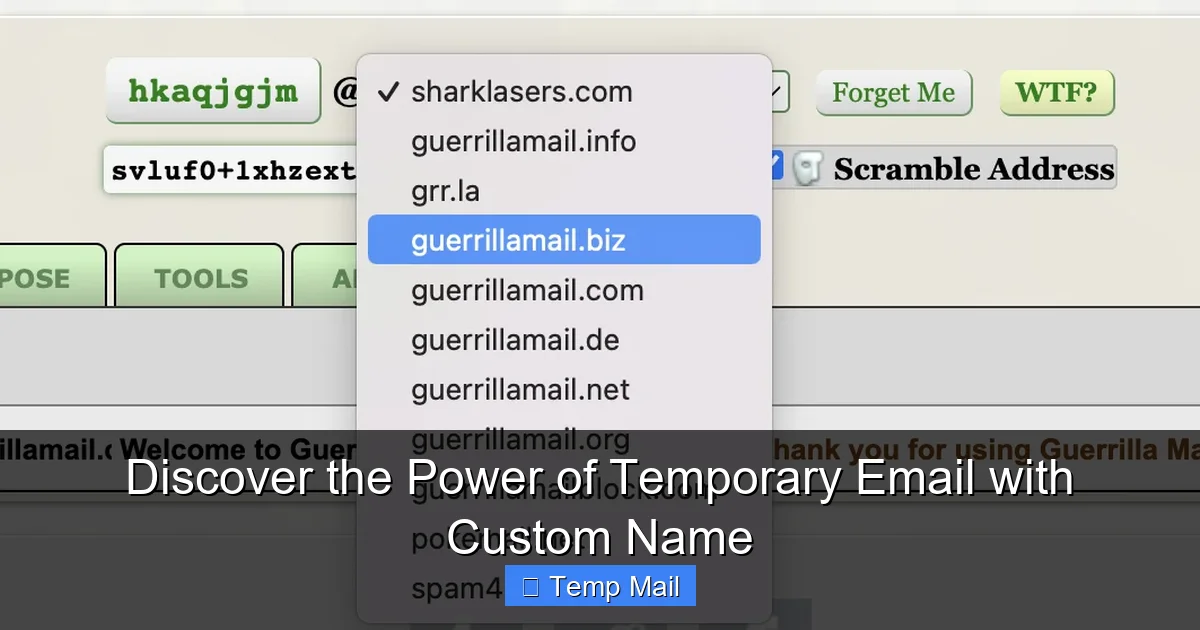
Now, let’s talk about the superhero in this story: the disposable email address. Services like Temp-Mail, 10MinuteMail, or Guerrilla Mail provide you with a random, functional email inbox that lasts for a set period (10 minutes to 24 hours, sometimes longer). You use it to receive the initial verification email, click the link, and then abandon it. The benefits are immediate and profound.
Visual guide about Why You Absolutely Need a Temporary Email for Trial Accounts
Image source: media.cheggcdn.com
Instant Spam Elimination at the Source
The most obvious and gratifying benefit is a clean primary inbox. Because the trial company only has the disposable address, all their post-trial marketing emails go to a mailbox you’ve already mentally discarded. You don’t have to hunt for the “unsubscribe” link (which sometimes confirms your email is active, making spam worse). You don’t have to mark anything as spam. The problem never enters your world. This is spam prevention by isolation, and it’s 100% effective.
Creating a Firewall for Your Identity
Think of your real email as your home address. You wouldn’t give it to a random street surveyor. A temporary email is like using a P.O. box for all those one-off interactions. It creates a critical layer of separation between your true self and the commercial web. This means:
- No profiling: Companies cannot connect your trial activity to your main identity. Your browsing for graphic design tools doesn’t start haunting you with Adobe ads everywhere you go.
- Reduced data broker value: Data brokers compile profiles from multiple sources. A disjointed profile with only a temp email attached to a trial is far less valuable and harder to link back to you.
- Control over your narrative: You decide which services get the privilege of your direct contact. Everything else gets the disposable gateway.
Step-by-Step: Using a Temporary Email for Trial Accounts Like a Pro
Okay, you’re convinced. How do you actually do it? It’s surprisingly simple, but a few pro-tips make the process seamless.
Visual guide about Why You Absolutely Need a Temporary Email for Trial Accounts
Image source: study.com
1. Choose and Bookmark Your Service
There are many reputable temporary email providers. For trial accounts, you want one that is reliable and has a clear inbox interface. Good options include Temp-Mail.org, 10MinuteMail.com, and DropMail.me. Bookmark the site. When you need a temp email, you simply visit the bookmark and a new address is generated instantly.
2. The Sign-Up Dance
Navigate to the trial offer. In the email field, paste or type the temporary address provided by your chosen service. Keep that browser tab open! You’ll need to switch back to it to receive the verification email. Fill out the rest of the form (you can often use a fake name here too, but be mindful of terms of service). Submit the form.
3. Verify and Activate
Switch back to your temp mail tab. Refresh the inbox. Within seconds, you should see an email from the company (often with a subject like “Verify your email address”). Open it and click the verification link. This will usually open a new tab and activate your trial account. You can now close the temp mail tab if you wish, but keep it open in the background for any “welcome” emails that might contain important login details or initial setup instructions.
4. The Golden Rule: Use a Different Temp for Each Trial
For maximum privacy and organization, use a new disposable email for every single trial. Don’t reuse the same one for Netflix, then Adobe, then Spotify. This creates perfect isolation. If one service finds a way to spam your temp inbox (some have gotten clever), you only lose that one address, not all your trials. When that specific inbox expires, that trail goes completely cold.
5. Post-Trial: The Art of Forgetting
Once your trial period is over, simply close the browser tab with the temp mail service. Do not write down the address. Do not try to log in with it later. It will expire and be recycled by the service for someone else. That’s it. No cleanup, no unsubscribe, no lingering connection. You have achieved a perfect, zero-commitment trial.
Beyond Spam: Other Smart Uses for Disposable Emails
While trial accounts are the #1 use case, the utility of a temporary email extends far and wide. Once you adopt this habit, you’ll see opportunities everywhere to protect your primary address.
Visual guide about Why You Absolutely Need a Temporary Email for Trial Accounts
Image source: mavidea.com
Downloading Gated Content
That whitepaper, ebook, or industry report that requires an email? Use a temp mail. You get the download link instantly in the disposable inbox without joining another newsletter list you’ll never read.
Signing Up for One-Time Events or Webinars
Attending a single webinar or event? The host will likely add you to their general mailing list. Give them the temp address, get the event link, and avoid the follow-up sales pitches.
Accessing Public Wi-Fi or Services
Some airports, cafes, or hotels require an email to access their Wi-Fi network. A temporary email is perfect here. It gets you online without giving your details to the venue’s marketing partner.
Testing Website or App Registrations
Developers and QA testers use temp emails constantly to test user flows, password reset functions, and email notifications without polluting real test accounts or personal inboxes.
Creating Anonymous Social Media or Forum Accounts
For a burner account on a forum or a secondary social profile where you don’t want your real email tied to your activity, a disposable address is the standard tool. (Note: Always review a platform’s Terms of Service regarding disposable emails).
Debunking Myths: Are Temporary Emails Safe and Legal?
There’s a lot of misinformation about disposable email services. Let’s clear the air. Using a temporary email for trial accounts is both safe and legal, but understanding the nuances is key.
Myth 1: “They’re Illegal or Unethical.”
This is false. Temporary email services are perfectly legal businesses. They provide a communication tool. The ethics come into play with *how* you use it. Using it to sign up for a free trial, which explicitly offers a trial with no purchase obligation, is well within the spirit of the offer. You are not lying; you are using a different contact point. It becomes unethical if you use it to fraudulently sign up for paid services with no intent to pay, or to evade bans you rightfully earned. For legitimate trial testing, it’s a smart privacy practice.
Myth 2: “They’re Insecure and My Data is at Risk.”
The security model is different, not inherently insecure. The inbox for your temporary email is typically not password-protected on the provider’s end—anyone with the URL can view it. This is by design for ease of use. Therefore, you should never use a temporary email for:
- Password resets on important accounts (bank, primary email, etc.)
- Receiving sensitive documents like contracts, medical records, or financial statements.
- Any communication that requires a verifiable, secure, and persistent identity.
For the sole purpose of receiving a single verification link for a trial? The risk is negligible, as the link is usually a one-time token that expires quickly. The service provider’s security for that link is what matters, not the temp mail’s inbox security.
Myth 3: “All Sites Block Them, So They’re Useless.”
Some high-security services (like certain banking apps or government portals) do block known disposable email domains. However, the vast majority of consumer SaaS, streaming, and software trial offers do not. They want your sign-up, and blocking a large chunk of privacy-conscious users is bad for their conversion metrics. If a site blocks a temp email, you can simply try a different provider or a different domain from the same provider. It’s a minor hurdle, not a wall.
Choosing the Right Temp Mail Service: Features That Matter
Not all disposable email services are created equal. For the specific use case of temporary email for trial accounts, you need reliability and simplicity. Here’s what to look for.
Core Requirements: No-Fuss Inbox & Domain Variety
First, the interface should be clean. You open the site, you see your new email address at the top, and a big, clear inbox below. That’s it. Avoid services that bombard you with ads, require solving CAPTCHAs constantly, or have confusing navigation. Second, look for services that offer multiple domain options (e.g., @tmpmail.org, @tmpmail.net). If one domain gets blocked by a trial site, you can generate a new address on a different domain from the same service without switching platforms.
Advanced Features for Power Users
While basic is fine, some services offer helpful extras:
- Custom Inbox Duration: The ability to extend the inbox life from 10 minutes to 1 hour or more if you need more time for a slow verification email.
- Reply Functionality: Rare, but some allow you to reply to the received email. Useful if a trial support team replies to your disposable address with a question.
- Browser Extensions: Some services offer a Chrome or Firefox extension that generates a temp email with one click and automatically fills it into web forms.
- API Access: For developers automating test sign-ups, an API is crucial.
Red Flags to Avoid
Steer clear of services that:
- Require you to create an account to use their disposable email (that defeats the purpose).
- Have a poor reputation for being “spammy” themselves with aggressive pop-ups.
- Do not clearly state their data retention policy (though, by nature, they should delete everything quickly).
- Are slow or have unreliable inbox delivery. You need that verification email NOW.
For 95% of users, Temp-Mail.org or 10MinuteMail.com are excellent, no-frills starting points that meet all the core requirements perfectly.
Conclusion: Your Inbox, Your Rules
The digital world is built on an exchange: you give your attention and your data (often in the form of your email address) in return for a service, content, or convenience. Free trials are a classic example of this exchange, but the terms are rarely balanced. The default outcome is a cluttered inbox, a more trackable digital profile, and a persistent marketing relationship you never asked for. Adopting the practice of using a temporary email for trial accounts flips that script. It restores balance. It says, “I will try your service on my terms, with my privacy intact, and without a long-term obligation.”
This isn’t about being paranoid; it’s about being prudent. Your primary email address is a valuable asset. It’s the key to resetting passwords for your bank, your social life, and your work. It’s the primary channel for serious communication. Treating it like a public square, where anyone can post a flyer, is a recipe for digital fatigue and risk. Using a disposable address for the ephemeral, the promotional, and the experimental is a simple act of digital self-defense. It’s a small habit that yields massive returns in reduced stress, enhanced privacy, and a cleaner, more focused online experience. So next time you see that “Start Free Trial” button, pause. Open a new tab for your trusted temp mail service, generate an address, and sign up with confidence. Your future, less-spammed self will thank you.
Frequently Asked Questions
Is using a temporary email for a free trial against the terms of service?
Generally, no. Most trial offers only require a valid email for verification. They do not specify that it must be a permanent, personal email. However, it’s always wise to quickly scan the Terms of Service. Using a temp email to fraudulently obtain a paid service for free would violate terms, but simply using it for the intended free trial period is a standard privacy practice.
Can I receive the trial verification link and start using the service?
Absolutely. That is the primary function of a temporary email. The verification link is sent to the disposable address you provided. As long as you have the inbox open (or can refresh it), you can click the link and activate your trial just like with a regular email. The service sees the address as valid because it successfully received and delivered the email.
What happens if I need to reset my password for the trial service?
This is a critical limitation. If you forget your password for a service you signed up with a temporary email, you will not be able to receive the password reset email. The inbox will be gone. Therefore, you should only use a temp email for trials where you are confident you will remember your password, or where you don’t plan to use the service long-term anyway. For any service you intend to keep, use your real email.
Are temporary emails truly anonymous?
They offer a high degree of anonymity from the *service you are signing up for*, as that service only has the disposable address. However, the temporary email provider itself may keep logs. Reputable providers claim not to store emails after deletion and not to log IP addresses, but you are ultimately trusting that provider. For extreme anonymity needs, combining a temp email with a reputable VPN is a stronger practice.
Will the trial service know I used a disposable email?
Yes, the domain (e.g., @tmpmail.org) will be visible to them. Some sophisticated services may block known disposable domains. However, most consumer-focused trial services do not check for this, as it would reduce their sign-up conversion rates. If they do block it, you simply generate a new address on a different domain from the same temp mail provider.
Can I use a temporary email for paid subscriptions after the trial?
You should not. Once you decide to convert a trial into a paid subscription, you must use a permanent, accessible email address. You need to receive invoices, payment receipts, renewal notices, and critical account communications. Using a disposable email for a paid service will lead to a lost account and payment issues the moment the temp inbox expires.